Abstract
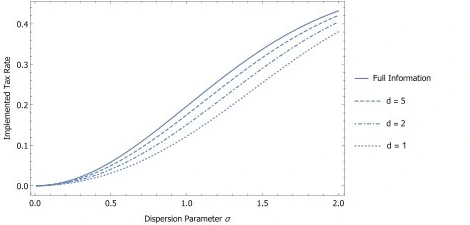
We examine the effect that agents anchor their perceptions of societal mean incomes on their own incomes. We show analytically and verify by numerical simulation that self-anchoring can lead to substantial misperceptions even when sampling is unbiased and fully random, especially when the sampling ratio is small. Within a Meltzer–Richard framework, we then demonstrate that self-anchoring leads to a decrease in implemented redistribution.
Citation
Jan Schulz & Daniel M. Mayerhoffer (2024): Social Sampling, Self-Anchoring and Redistribution. Economics Letters 244: 111942.