Abstract
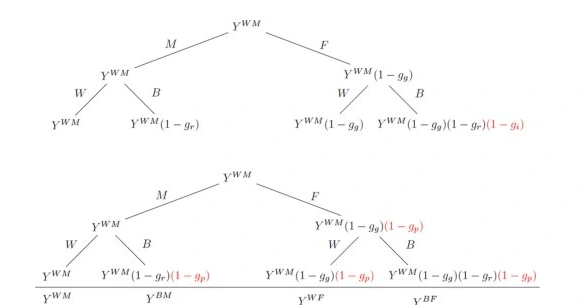
We study how overlapping identities shape wage gaps, focusing on gender and race in the United States. The standard empirical operationalisation of intersectionality can be fragile because its reference-group convention may omit a wage premium uniquely accruing to White men. We propose a structural decomposition of group mean wages that allocates observed gaps into gender, race, and an interaction component. The interaction can be interpreted either as an intersectional penalty or as excessive privilege. Applying the framework to U.S. wage data and adjusted gaps from existing studies, we find persistent evidence of excessive White male privilege and little evidence of an additional intersectional penalty in wages. We also examine redistribution rules that use the estimated excess premium as a tax base.