Abstract
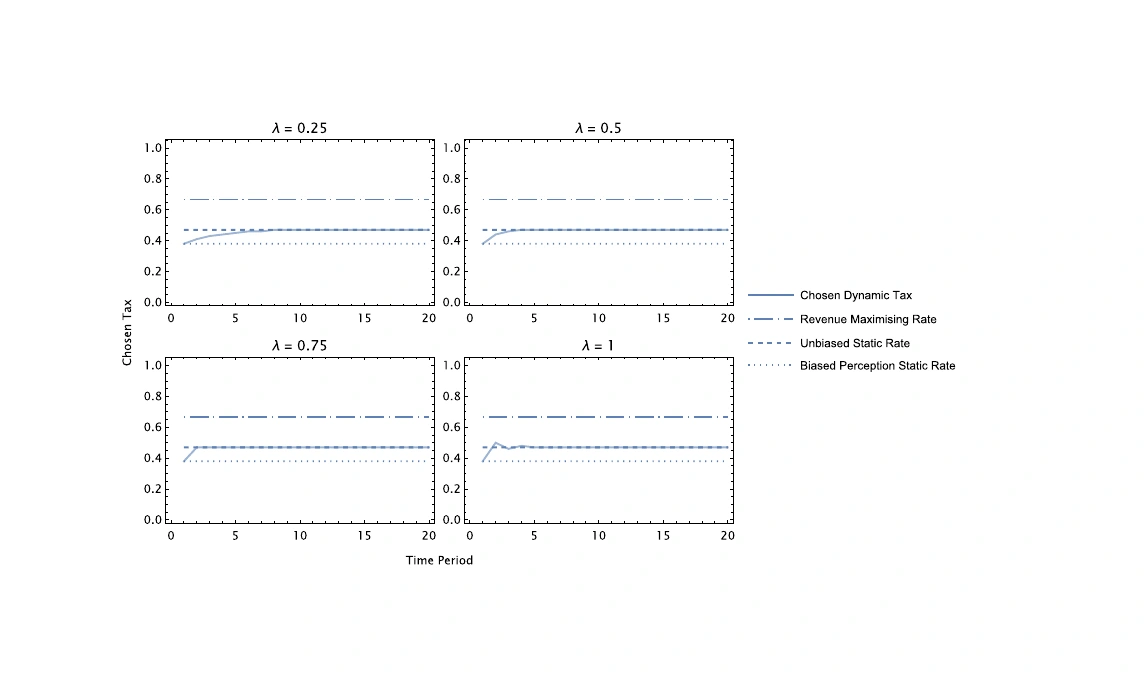
We examine the puzzle of why economic inequality has not resulted in political measures to mitigate it, and we propose that the reason is that segregation in social networks causes people to misperceive inequality. We model taxation and voting behavior with an expo nential income distribution and a Random Geometric Graph–type model to represent ho mophily, which leads people to perceive their own income rank and income to be close to the middle. We assume that people base their beliefs about mean income on a compound of the true mean and their local perception in the network, and that higher homophily causes lower implemented tax rates, which explains why redistribution preferences appear decoupled from actual inequality. In a dynamic extension, we also demonstrate that a rich set of dynamic behaviors can emerge from rational updating beliefs about efficiency and societal average income. The modeled misperceptions not only decrease redistribution in a static setting but hinder agents from adapting and learning the unbiased tax rate in a dynamic setting